Expert Commercial Kitchen Equipment Troubleshooting Guide 2026 – Diagnose & Fix Common Issues
Introduction
In the high-pressure environment of Saudi Arabia’s commercial kitchens, equipment malfunctions can bring operations to a screeching halt. A walk-in freezer failing during Ramadan’s peak hours, an oven not reaching temperature during a banquet, or a fryer overheating during lunch service – these aren’t just inconveniences; they threaten food safety, revenue, and reputation.
At Powerman Trading Est, we understand that early detection is the key to minimizing downtime. This comprehensive troubleshooting guide empowers kitchen managers to identify common issues quickly and know when to call in the experts. Whether you’re managing a hotel in Riyadh, a restaurant in Jeddah, or a catering facility in Al Khobar, this guide will help you maintain smooth operations.
Why Early Troubleshooting Matters
In Saudi Arabia’s demanding hospitality climate, every minute of downtime costs money. According to industry studies:
- A single hour of refrigeration failure can lead to SAR 15,000+ in food waste
- Cooking equipment downtime during peak service can result in lost revenue exceeding SAR 50,000
- Equipment failures account for 30% of all kitchen emergencies in the Gulf region
Early troubleshooting helps you:
- Prevent small issues from becoming catastrophic failures
- Extend equipment lifespan by addressing problems early
- Maintain compliance with Saudi Food and Drug Authority (SFDA) regulations
- Reduce emergency repair costs by up to 70%
Common Equipment Issues and Troubleshooting Steps
- Refrigeration Systems
Issue: Not Cooling Properly
Possible Causes:
- Dirty condenser coils
- Faulty thermostat or temperature sensor
- Refrigerant leaks
- Overloaded unit
Troubleshooting Steps:
- Check temperature display – is it set correctly?
- Inspect condenser coils for dust/debris (clean if necessary)
- Listen for unusual sounds from the compressor
- Look for frost buildup on evaporator coils
Pro Tip: In Saudi’s extreme heat, condenser coils should be cleaned monthly to maintain efficiency. Learn more about our refrigeration maintenance services.
Issue: Unusual Noise or Vibration
Possible Causes:
- Loose compressor mounting
- Worn fan bearings
- Refrigerant flow issues
- Foreign objects in the unit
Troubleshooting Steps:
- Identify the source of the noise (compressor, fan, or pipes)
- Check for loose components and tighten if safe to do so
- Ensure the unit is level and on a stable surface
- If noise persists, shut down immediately and call professionals
Issue: Ice Buildup or Leaks
Possible Causes:
- Defective defrost timer or heater
- Door gasket failure
- Clogged drain line
- High ambient humidity
Troubleshooting Steps:
- Check door seals for gaps (see our custom gasket guide)
- Inspect drain line for clogs and clear if possible
- Verify defrost cycle is functioning
- Monitor humidity levels in the surrounding area
- Cooking Equipment
Issue: Ovens Not Reaching Temperature
Possible Causes:
- Faulty heating elements
- Calibration issues
- Insufficient power supply
- Worn door seals
Troubleshooting Steps:
- Verify oven is preheating adequately (use an independent thermometer)
- Check for visible damage to heating elements
- Ensure power supply meets equipment requirements
- Test door seal integrity (replace if necessary)
Issue: Burners Not Igniting Consistently
Possible Causes:
- Clogged burner ports
- Faulty ignition system
- Gas supply issues
- Moisture in ignition components
Troubleshooting Steps:
- Clean burner ports with a brush (never use metal tools)
- Check for spark ignition clicking when turned on
- Verify gas supply valve is fully open
- Allow moisture to evaporate if equipment was recently cleaned
Issue: Fryers Overheating or Underperforming
Possible Causes:
- Faulty thermostat
- Sediment buildup in oil
- Incorrect oil level
- Worn heating elements
Troubleshooting Steps:
- Check oil level and adjust if needed
- Drain and clean fryer to remove sediment
- Test thermostat accuracy with a thermometer
- Inspect heating elements for damage
Safety Note: Always follow manufacturer guidelines when troubleshooting cooking equipment. Never attempt repairs on gas systems without proper training.
- Other Frequent Problems
Electrical Faults and Power Issues
Common Symptoms:
- Intermittent power loss
- Tripped breakers
- Burned smells near equipment
- Flickering displays
Troubleshooting Steps:
- Check circuit breakers and reset if tripped
- Inspect power cords for damage
- Verify voltage matches equipment requirements
- Look for signs of overheating at connection points
Critical Safety Warning: Electrical issues pose serious fire hazards. If you’re not qualified, immediately call professionals. Our emergency electrical services are available 24/7.
Ventilation System Inefficiencies
Common Issues:
- Poor airflow
- Excessive noise
- Grease buildup
- Filter failures
Troubleshooting Steps:
- Check and clean filters (weekly cleaning is recommended)
- Inspect ductwork for obstructions
- Verify fan motor is functioning
- Test fire suppression system functionality
Motor or Fan Failures
Symptoms:
- Unusual grinding or squealing noises
- Overheating
- Intermittent operation
- Complete failure to start
Troubleshooting Steps:
- Check for visible obstructions in fan blades
- Inspect motor for overheating or burning smells
- Verify electrical connections are secure
- Test capacitor if applicable
Professional Troubleshooting Process
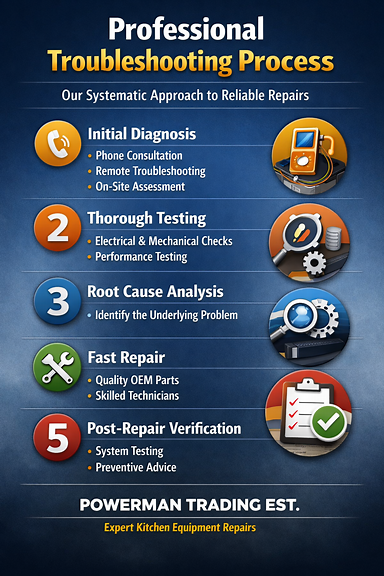
When DIY troubleshooting isn’t sufficient, Powerman Trading Est follows a systematic approach:
Step 1: Initial Diagnosis
- Phone consultation to understand symptoms
- Remote troubleshooting for common issues
- On-site assessment for complex problems
Step 2: Thorough Testing
- Electrical diagnostics using multimeters and clamp meters
- Mechanical inspection of moving parts
- Performance testing under load conditions
Step 3: Root Cause Analysis
- Identifying whether issues stem from:
- Electrical faults
- Mechanical wear
- Calibration problems
- Environmental factors
Step 4: Fast Repair Using Quality Parts
- OEM or equivalent parts for reliability
- On-hand inventory for common replacements
- Experienced technicians for efficient repairs
Step 5: Post-Repair Testing and Recommendations
- Functional verification of all systems
- Preventive recommendations to avoid future issues
- Detailed report with findings and suggestions
Our Advantage: Technicians carry diagnostic tools and common parts on service vehicles, enabling same-day repairs in most cases.
Preventive Maintenance: The Best Troubleshooting
The most effective troubleshooting happens before problems occur. Our preventive maintenance programs include:
Daily Checks
- Temperature monitoring
- Basic cleaning routines
- Visual inspections for wear
Weekly Inspections
- Filter replacements
- Lubrication of moving parts
- Calibration verification
Monthly Maintenance
- Deep cleaning of critical components
- Electrical system checks
- Performance testing
Benefits of Preventive Maintenance:
- 70-80% reduction in emergency calls
- Extended equipment lifespan by 3-5 years
- Energy savings of 15-25%
- Improved compliance with SFDA standards
Discover our preventive maintenance plans tailored for Saudi Arabian kitchens.
When to Call Professionals
While many minor issues can be addressed in-house, immediately call professionals when you encounter:
Safety Hazards
- Gas leaks (smell or hissing sounds)
- Electrical sparking or burning smells
- Refrigerant leaks (frost on pipes)
- Fire suppression system malfunctions
Complex Issues
- Control panel failures
- Compressor problems in refrigeration
- Major electrical faults
- Equipment that won’t power on
Regulatory Compliance
- SFDA violations
- Health code non-compliance
- Insurance requirements
- Warranty maintenance
Powerman Response Times:
- Al Khobar/Dammam: 2 hours
- Riyadh: 3-4 hours
- Jeddah: 4-6 hours
Powerman Trading Est: Your Troubleshooting Partner
Why Choose Us?
- 24/7 Emergency Support: Call us anytime at +966 53 600 0246
- Factory-Trained Technicians: Certified for all major brands
- Local Expertise: Understanding of Saudi’s unique challenges
- Quality Parts: OEM or premium equivalent components
- Transparent Pricing: No hidden fees
Our Service Area
We provide troubleshooting and repair services across:
- Eastern Province: Al Khobar, Dammam, Jubail, Ras Tanura
- Riyadh: Citywide coverage
- Western Region: Jeddah, Makkah, Taif
- Other Cities: Khobar, Yanbu, Hofuf
Conclusion: Proactive Troubleshooting Saves Saudi Arabian Kitchens
In Saudi Arabia’s competitive hospitality sector, equipment reliability is non-negotiable. By implementing this troubleshooting guide and partnering with Powerman Trading Est, you can:
- Minimize costly downtime
- Extend equipment lifespan
- Ensure regulatory compliance
- Protect your bottom line
Don’t wait for a crisis to strike. Whether you need emergency troubleshooting or want to implement preventive measures, our expert team is ready to help.

Contact Powerman Trading Est Today:
📞 +966 53 600 0246 | 📞 +966 54 141 5998
✉️ raouf@kitchenmaint.com
📍 6705 Prince Fahad Street, Al Khobar, Saudi Arabia
Understanding Equipment Error Codes and Digital Diagnostics
Modern commercial kitchen equipment often comes equipped with digital displays and error code systems that can provide immediate insights into malfunctions. Learning to interpret these codes can dramatically speed up troubleshooting. For example:
- Hobart dishwashers may display “E1” for water inlet issues
- Rational combi ovens might show “A01” for temperature sensor faults
- Frigoglass freezers could indicate “EC5” for evaporator fan problems
Keep a master cheat sheet of error codes for all your equipment in the kitchen office. Many manufacturers provide these in the user manual or on their support portals. If you encounter an unfamiliar code, note it down and contact our technicians – this information helps us diagnose issues remotely and arrive with the right parts. Our team is trained to decode even the most cryptic error messages across all major brands.
Environmental Factors Affecting Kitchen Equipment Performance
Saudi Arabia’s unique climate presents specific challenges for commercial kitchen equipment:
- High ambient temperatures (often exceeding 45°C) can cause refrigeration systems to overwork
- Sand and dust can clog condenser coils and air filters
- High humidity may lead to condensation issues in electrical panels
- Hard water can cause scale buildup in boilers and steam equipment
Understanding these environmental stressors helps implement proactive countermeasures. For instance, installing additional air filtration or increasing cleaning frequency for condenser coils can prevent many common failures. Our technicians can conduct an environmental impact assessment during maintenance visits to recommend equipment-specific protections.
Troubleshooting Gas Appliances: Safety First
Gas-powered equipment requires special precautions during troubleshooting. Never attempt repairs on gas systems unless you’re certified. Key safety steps include:
- Ventilation: Always ensure proper airflow when working with gas appliances
- Leak Testing: Use soapy water to check for gas leaks (bubbles indicate a leak)
- Ignition Safety: Keep ignition sources away when checking gas lines
- Emergency Shut-off: Know the location of main gas valves
If you suspect a gas leak, evacuate immediately and call the gas company or emergency services. Our technicians carry gas detection equipment and are trained in Saudi Civil Defense gas safety protocols. Remember – when in doubt, shut it out and call the pros.
The Role of Water Quality in Equipment Longevity
In Saudi Arabia, where water hardness varies by region, water quality significantly impacts equipment performance. Common issues include:
- Scale buildup in coffee machines and steam ovens
- Sediment clogs in dishwashers and water filters
- Corrosion in pumps and valves due to high mineral content
Implementing a water treatment program can prevent many troubleshooting scenarios. This may include:
- Installing water softeners
- Using descaling solutions regularly
- Cleaning aerators and filters monthly
- Testing water hardness quarterly
Our team can recommend region-specific water treatment solutions and help integrate them into your preventive maintenance routine. Many clients see a 40-60% reduction in water-related equipment failures after implementing proper treatment.
Advanced Troubleshooting Tools and Techniques
For more complex issues, professional technicians use specialized diagnostic tools that go beyond basic visual inspections:
- Thermal imaging cameras to detect hot spots in electrical systems
- Clamp meters to measure current draw without disconnecting wires
- Refrigeration manifolds to check pressure and charge levels
- Combustion analyzers for gas appliance efficiency testing
- Vibration analysis tools to identify mechanical wear
While these tools aren’t typically available to kitchen staff, understanding their purpose helps you better communicate with technicians when describing problems. For example, instead of saying “the oven makes noise,” you can note “there’s a rhythmic vibration that increases with temperature” – this helps our technicians narrow down potential causes before arrival.
Creating a Kitchen Equipment Troubleshooting Protocol
Establish a step-by-step troubleshooting protocol for your staff to ensure consistency and safety:
- Safety Check: Verify equipment is properly locked out/tagged out before inspection
- Symptom Documentation: Note when the problem started, any unusual sounds/smells, and operating conditions
- Basic Checks: Review user manuals, error codes, and obvious issues
- Simple Fixes: Attempt only manufacturer-approved simple remedies
- Decision Point: Determine if issue can be resolved in-house or requires professional help
- Reporting: Document all actions taken for future reference
This protocol should be part of your kitchen standard operating procedures (SOPs) and included in staff training. Regular drills can help ensure everyone knows the proper steps to follow during equipment emergencies.
Manufacturer Resources and Warranty Considerations
Many equipment manufacturers provide valuable troubleshooting resources that kitchen managers often overlook:
- Online diagnostic portals with interactive troubleshooting guides
- Technical support hotlines with factory-trained specialists
- Video libraries demonstrating common repairs
- Software updates for digital control panels
When troubleshooting, always check if the issue might be covered under warranty. Attempting unauthorized repairs could void coverage. Our technicians are authorized service providers for many major brands, ensuring repairs maintain warranty status. We can also help you navigate manufacturer warranty claims and obtain necessary approvals.
Integrating Troubleshooting with Kitchen Workflow
Effective troubleshooting should be integrated into daily kitchen operations, not treated as a separate activity:
- Shift change handovers should include equipment status updates
- Pre-service checks should include basic equipment functionality tests
- Supplier communications should highlight any recurring equipment issues
- Staff training should include basic troubleshooting awareness
Consider implementing an equipment logbook where staff can note:
- Performance observations
- Unusual sounds or behaviors
- Maintenance actions taken
- Follow-up needed
This creates a historical record that helps identify patterns and prevent recurring issues. During our maintenance visits, we review these logs to provide more targeted service recommendations.
References (External Links)
- SFDA Food Safety Regulations
- Hospitality Equipment Maintenance Standards
- Energy Efficiency in Commercial Kitchens
- Commercial Kitchen Electrical Safety
- Refrigeration Troubleshooting Guide
- Saudi Vision 2030 Hospitality Targets
- Food Safety Management Systems
- Commercial Kitchen Ventilation Standards